UNDERGRADUATE

Electronic Engineering

ABOUT the

Program

Electronic engineering is a professional discipline that encompasses, among others, analog and digital electronics, power electronics, embedded systems, and consumer electronics. It is also related to areas such as nanotechnology, materials science, telecommunications, signal processing, bioengineering, instrumentation, power control, industrial automation, process control, and robotics. This branch of engineering develops applications and provides solutions to problems in industrial, medical, governmental sectors, and society in general.

Bucaramanga, Santander: SNIES 3731 | Qualified Registration: Resolution of the Ministry of National Education (MEN) No. 003639 dated April 1, 2024, on the basis of high quality accreditation, with a validity of 8 years.

Start your registration here!​

Bucaramanga, Barbosa, Barrancabermeja, Málaga, Socorro

Título

DEGREE:

Electronics Engineer

Duración

DURATION:

10 semesters

Modalidad

MODALITY:

In-person

Ubicación

CAMPUS:

Bucaramanga
Barbosa (basic cycle)
Barrancabermeja (basic cycle)
Málaga(basic cycle)
Socorro (basic cycle)

APPLICANT

Profile

.

Applicants to the Electronic Engineering program must possess logical-mathematical, spatial, intrapersonal, and interpersonal skills, as well as the ability to identify and formulate problems and reach conclusions independently. They are also expected to have motor and visual skills that enable them to use and operate computers, devices, and electronic equipment of various kinds, and to continuously acquire new knowledge.

They must also demonstrate the ability to understand, deduce, and apply physical-mathematical concepts, along with a willingness for autonomous learning, motivated by quality and excellence. In addition, they are expected to be receptive, tolerant, supportive, ethical, responsible, flexible, entrepreneurial, proactive, and capable of leadership, with a strong sense of social awareness.

GRADUATE

Profile

.

Graduates of the Electronic Engineering program at the Universidad Industrial de Santander are capable of analyzing, adapting, designing, selecting, and developing hardware and software solutions to problems and needs in their environment, based on principles of circuits, programming, and signal processing. They are trained in areas such as circuit design and integrated systems, supervision and control, telecommunications, power electronics, expert systems, and data processing.

In addition, they are well-rounded and innovative professionals, prepared to make decisions guided by principles of ethical, social, and environmental responsibility, with the ability to work in interdisciplinary teams and engage in lifelong learning.

OUR

Accreditations

.

  • Renewal of High Quality Accreditation: Resolution no. 003639 dated April 01, 2024 of the Ministry of National Education (MEN).

Validity: Eight (8) years.

  • International Accreditation: Internationally accredited by the non-profit non-governmental organization ABET (Accreditation Board for Engineering and Technology).

Follow these steps for more information:

  1. Click on this link.

  2. Select the button: SEARCH ABET-ACCREDITED PROGRAMS.

  3. Select the tab: Search By Name

  4. Select the option: Institution Search.

  5. Search for: Universidad Industrial de Santander.

CONTINUOUS

Improvement

.

Electronics Engineering program has implemented a process of continuous improvement that will allow future professionals to have a solid educational foundation with the capacity to manage innovative processes, emerging technologies, and anticipate the welfare and safety needs of the community. With this, students, employers, and society in general will be confident that the program meets quality standards and prepares graduates to enter a global workforce.

Program Educational Objectives

The Program Educational Objectives (PEOs) for Electronics Engineering are to educate engineering graduates who 3 to 5 years after graduation:

  • Create engineering solutions in profit of the community or productive sector, based on natural sciences knowledge and electronics engineering skills.

  • Participate, lead and communicate effectively in interdisciplinary teams.

  • Practice their professional activity in an integral, ethical and responsible manner and compromise with the environment and society.

Student Outcomes

The Electronic Engineering program aims to develop the following learning outcomes in its students:

  • LO1: Identify, formulate, and solve complex problems in electronic engineering through the application of principles of engineering, science, and mathematics.
  • LO2: Apply engineering design to develop solutions that meet specific needs, considering public health, safety, and welfare, as well as global, cultural, social, environmental, and economic factors.
  • LO3: Communicate effectively about problems and solutions in electronic engineering to diverse audiences.
  • LO4: Recognize ethical and professional responsibilities in electronic engineering contexts and make well-founded judgments, considering their impact in global, economic, environmental, and social contexts.
  • LO5: Work effectively in teams whose members collaboratively provide leadership, set goals, plan tasks, and achieve objectives.
  • LO6: Develop and conduct appropriate experimentation, analyze and interpret data, and use engineering judgment to draw conclusions.
  • LO7: Acquire and apply new knowledge as needed for the practice of electronic engineering, using appropriate learning strategies.


Historical Enrollment and Graduation Statistics


2021

2022

2023

2024

2025

Academic Term

II

I

II

I

II

I

II

I

II

Admitted

180

116

130

128

122

101

110

87

144

Enrolled

971

969

1005

992

958

987

1020

817

1069

Graduates (Term)

43

17

31

46

56

57

51

28

69

All about our program

ACADEMIC

Curriculum

.

Code:  20252           Credits:    4  – Calculus I


Code:  22949           Credits:    4  – Basic Chemistry


Code:  22979           Credits:    4  – Linear Algebra I


Code:  24948           Credits:    0  – University Life and Culture


Code:  23424           Credits:    4  – English I


.

Code:  20253           Credits:    4  – Calculus II


Code:  22950           Credits:    4  – Physics I


Code:  23425           Credits:    4  – English II


Code:  27132           Credits:    3  – Introduction to Engineering


Code:  23423           Credits:    1  – Physical Culture and Sports


.

Code:  20254           Credits:    4 – Calculus III


Code:  22953           Credits:    4  – Physics II


Code:  21619           Credits:    4  – Electrical Circuits I


Code:  27133           Credits:    3  – Computer Programming I


Code:  23272           Credits:    4  – Linear Algebra II


.

Code:  20255           Credits:    4  – Differential Equations


Code:  22956           Credits:    4  – Physics III


Code:  27134           Credits:    4  – Electrical Circuits II


Code:  23328           Credits:    3  – Engineering Drawing


Code:  27135           Credits:    3  – Computer Programming II


.

Code:  23332           Credits:    4  – Signal Processing


Code:  27136           Credits:    4  – Digital Systems I


Code:  27137           Credits:    3  – Introduction to Materials Science


Code:  23330           Credits:    4  – Electromagnetic Theory


Code:  23411           Credits:    4  – Electronic Devices


.

Code:  27125           Credits:    3  – Probability and Statistics


Code:  23414           Credits:    4  – Fundamentals of Analog Circuits


Code:  23413           Credits:    3  – Discrete Signal Processing


Code:  27138           Credits:    4  – Process Dynamics


Code:  00002           Credits:    3  – Contextual Course


.

Code:  27139           Credits:    4  – Communications I


Code:  27140           Credits:    3  – Digital Systems II


Code:  27120           Credits:    3  – Numerical Methods


Code:  27141           Credits:    3  – Control I


Code:  27142           Credits:    4  – Industrial Electronics


.

Code:  27143           Credits:    4  – Process Automation


Code:  27144           Credits:    4  – Control II


Code:  27145           Credits:    4  – Communications II


Code:  23420           Credits:    4  – Electronic Instrumentation


.

Code:  00003           Credits:    6  – Electives 


Code:  27146           Credits:    4  – Electronic Systems Design


Code:  27131           Credits:    3  – Engineering Project Management


Code:  27130           Credits:    3  – Undergraduate Thesis I


.

Code:  00003           Credits:    3  – Electives 


Code:  22977           Credits:    7  – Undergraduate Thesis II


Code:  00002           Credits:    3  – Contextual Course


.

Code:  23435           Credits:    3  – Industrial Communication Networks


Code:  23479           Credits:    3  – Embedded Systems


Code:  23480           Credits:    3  – Microelectronics


Code:  27150           Credits:    3  – Computer Networks I


Code:  27151           Credits:    3  – State Space Control


Code:  27154           Credits:    3  – Design of Microprocessors and Microcontrollers


Code:  27155           Credits:    3  – Enterprise Software Engineering


Code:  27156           Credits:    3  – Digital Image Processing


Code:  27157           Credits:    3  – Computer Networks II


Code:  27158           Credits:    3  – Transmission Media


Code:  27159           Credits:    3  – Computer Architecture I


I want to receive personalized advice

our

Faculty

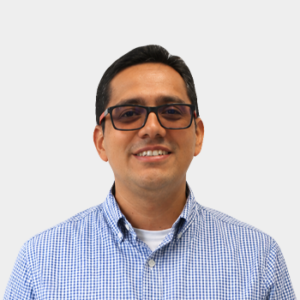
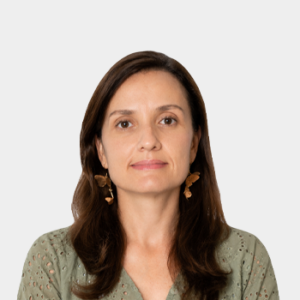
Professor Ana Beatriz Ramírez Silva of the School of Electrical, Electronics, and Telecommunications Engineering is presented to the general public and the educational community. The photo was taken in close-up, with a white background, and the professor is positioned in the center.

Ana Beatriz
RAMÍREZ SILVA

Doctor in Electrical Engineering
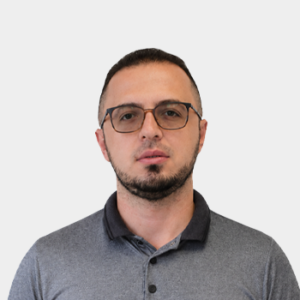
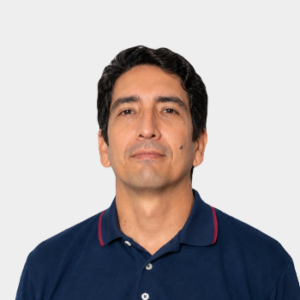
Professor Carlos Augusto Fajardo Ariza of the School of Electrical, Electronics, and Telecommunications Engineering is presented to the general public and the educational community. The photo was taken in close-up, with a white background, and the professor is positioned in the center.

Carlos Augusto
FAJARDO ARIZA

Doctor in Engineering (Electrical Engineering field)
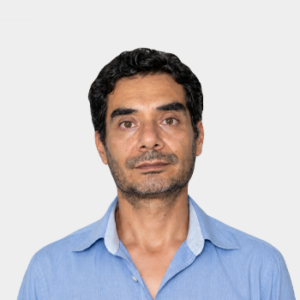
Fotografía de Funcionario

Carlos Rodrigo
CORREA CELY

Doctor in Chemical Engineering (Polymer field)
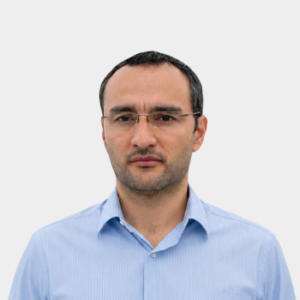
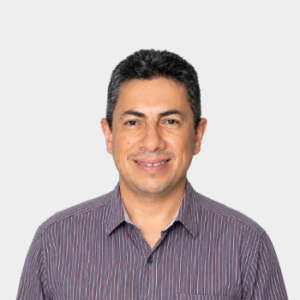
Professor César Antonio Duarte Gualdrón of the School of Electrical, Electronics, and Telecommunications Engineering is presented to the general public and the educational community. The photo was taken in close-up, with a white background, and the professor is positioned in the center.

César Antonio
DUARTE GUALDRÓN

Doctor in Electrical and Computer Engineering
Front photograph of Professor César Augusto Orozco Henao

César Augusto
OROZCO HENAO

Ph.D. in Electrical Engineering
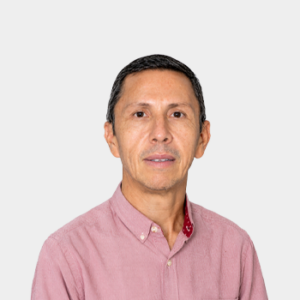
Professor Daniel Alfonso Sierra Bueno of the School of Electrical, Electronics, and Telecommunications Engineering is presented to the general public and the educational community. The photo was taken in close-up, with a white background, and the professor is positioned in the center.

Daniel Alfonso
SIERRA BUENO

Doctor in Biomedical Engineering
Professor Edison Andrés Soto Ríos of the School of Electrical, Electronics, and Telecommunications Engineering is presented to the general public and the educational community. The photo was taken in close-up, with a white background, and the professor is positioned in the center.

Edison Andrés
SOTO RIOS

Doctor in Engineering
Front photograph of Professor Edinson Fabián Adarme López

Edinson Fabián
ADARME LÓPEZ

Master of Electrical Engineering (c)
La foto fue tomada en primer plano, fondo blanco y el profesor está situado en el centro.

Ernesto
AGUILERA BERMÚDEZ

Doctor in Engineering
Front photograph of Professor Franklin Alexander Sepúlveda

Franklin Alexander
SEPÚLVEDA SEPÚLVEDA

Doctorate in Engineering-Automation
Se presenta al público general y la comunidad educativa al profesor de la Escuela de Ingenierías Eléctrica, Electrónica y de Telecomunicaciones, Gabriel Ordoñez Plata. La foto fue tomada en primer plano, fondo blanco y el profesor está situado en el centro.

Gabriel
ORDOÑEZ PLATA

Doctor in Industrial Engineering (Electrical Engineering)
The photo was taken in close-up, on a white background, with the professor Gerardo Latorre Bayona in the center.

Gerardo
LATORRE BAYONE

Doctor in Industrial Engineering (Electrical Engineering)
Professor German Alfonso Osma Pinto of the School of Electrical, Electronics, and Telecommunications Engineering is presented to the general public and the educational community. The photo was taken in close-up, with a white background, and the professor is positioned in the center.

German Alfonso
OSMA PINTO

Doctor in Engineering (Electrical Engineering)
The photo was taken in the foreground, white background and the teacher Guillermo Diaz is located in the centre.

Guillermo Andrés
DÍAZ FLÓREZ

Ph.D. in Electrical Engineering
The photo was taken in the foreground, white background and the teacher Hans Yecid Garcia is located in the centre.

Hans Yecid
GARCÍA ARENAS

Ph.D. in Engineering
Se presenta al público general y la comunidad educativa al profesor de la Escuela de Ingenierías Eléctrica, Electrónica y de Telecomunicaciones, Homero Ortega Boada. La foto fue tomada en primer plano, fondo blanco y el profesor está situado en el centro.

Homero
ORTEGA BOADA

Ph.D. in Engineering Sciences
Front photograph of Professor Edinson Fabián Adarme López

Iván David
SERNA SUÁREZ

Doctor in Engineering (Electrical area)
Se presenta al público general y la comunidad educativa al profesor de la Escuela de Ingenierías Eléctrica, Electrónica y de Telecomunicaciones, Jaime Guillermo Barrero Pérez. La foto fue tomada en primer plano, fondo blanco y el profesor está situado en el centro.

Jaime Guillermo
BARRERO PÉREZ

Master in Electrical Power
Professor Rodolfo Villamizar Mejía of the School of Electrical, Electronics, and Telecommunications Engineering is presented to the general public and the educational community. The photo was taken in close-up, with a white background, and the professor is positioned in the center.

Jairo
BLANCO SOLANO

Doctor in Engineering (Electrical Engineering)
The photo was taken in the foreground, white background and the teacher Javier Ferney Ochoa is located in the centre.

Javier Ferney
ARDILA OCHOA

Ph.D. in Engineering
Professor Johann Farith Petit Suárez of the School of Electrical, Electronics, and Telecommunications Engineering is presented to the general public and the educational community. The photo was taken in close-up, with a white background, and the professor is positioned in the center.

Johann Farith
PETIT SUÁREZ

Doctor in Electrical, Electronic and Automation Engineering
Se presenta al público general y la comunidad educativa al profesor de la Escuela de Ingenierías Eléctrica, Electrónica y de Telecomunicaciones, José Alejandro Amaya Palacio. La foto fue tomada en primer plano, fondo blanco y el profesor está situado en el centro.

José Alejandro
AMAYA PALACIO

Ph.D. in Engineering (Microelectronics Concentration area)
Front photograph of Professor Jose Jorge Carreño

José Jorge
CARREÑO ZAGARRA

Ph.D. in Engineering (Automatic Control)
The photo was taken in the foreground, white background and the teacher Jose Luis Herrera Celis is located in the centre.

José Luis
HERRERA CELIS

Ph.D. in Electronic Engineering
Front photograph of Professor Juan Manuel Rey

Juan Manuel
REY LÓPEZ

Doctor in Electronic Engineering
Se presenta al público general y la comunidad educativa al profesor de la Escuela de Ingenierías Eléctrica, Electrónica y de Telecomunicaciones, Julian Gustavo Rodriguez. La foto fue tomada en primer plano, fondo blanco y el profesor está situado en el centro.

Julián Gustavo
RODRÍGUEZ FERREIRA

Doctor in Physics (Astrophysics)
Se presenta al público general y la comunidad educativa a la profesora de la Escuela de Ingenierías Eléctrica, Electrónica y de Telecomunicaciones, María Alejandra Mantilla Villalobos. La foto fue tomada en primer plano, fondo blanco y la profesora está situada en el centro.

María Alejandra
MANTILLA VILLALOBOS

Ph.D. in Engineering (Electrical Engineering)
Se presenta al público general y la comunidad educativa a la profesora de la Escuela de Ingenierías Eléctrica, Electrónica y de Telecomunicaciones, Mónica Andrea Botero Londoño. La foto fue tomada en primer plano, fondo blanco y la profesora está situada en el centro.

Monica Andrea
BOTERO LONDOÑO

Ph.D. in Science-Physics
Fotografía de Funcionario

Omar Javier
TÍJARO ROJAS

Ph.D. in Engineering
Se presenta al público general y la comunidad educativa al profesor de la Escuela de Ingenierías Eléctrica, Electrónica y de Telecomunicaciones, Oscar Arnulfo Quiroga Quiroga. La foto fue tomada en primer plano, fondo blanco y el profesor está situado en el centro.

Oscar Arnulfo
QUIROGA QUIROGA

Doctor in Technology
Se presenta al público general y la comunidad educativa al profesor de la Escuela de Ingenierías Eléctrica, Electrónica y de Telecomunicaciones, Rodolfo Villamizar Mejía. La foto fue tomada en primer plano, fondo blanco y el profesor está situado en el centro.

Rodolfo
VILLAMIZAR MEJÍA
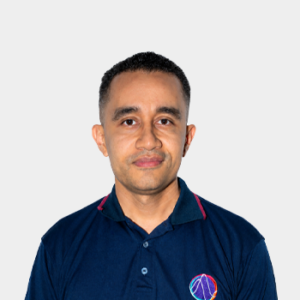
Se presenta al público general y la comunidad educativa al profesor de la Escuela de Ingenierías Eléctrica, Electrónica y de Telecomunicaciones, Said David Pertuz Arroyo. La foto fue tomada en primer plano, fondo blanco y el profesor está situado en el centro.

Said David
PERTUZ ARROYO

Doctor in Computer Engineering

Our

reach

Icono de estudiantes
0

Students

*Second semester
2025 data

Graduado
0

Alumni

*Second semester
2025 data

WOULD YOU LIKE MORE INFORMATION?

Contact Us

Contact
Contact

School of Electrical, Electronic and Telecommunications Engineering

Telephone: +57 (607) 634 4000

Extension: 2364

Email: jaamaya@uis.edu.co

Location
Location

Campus Central UIS

Bucaramanga, Santander

Carrera 27 calle 9

Edificio de Ingeniería Eléctrica, quinto piso

Office hours
Office hours

Office Hours:

Monday to Friday

7:00 a.m. – noon

2:00 p.m. – 5:00 p.m.

Skip to content