UNDERGRADUATE

Mechanical Engineering

ABOUT THE

Program

As a branch of knowledge that promotes the socio-economic development of communities, mechanical engineering aims to dignify human work through the design and construction of equipment, systems, and machines that contribute to the reduction of their physical effort while improving their quality of life.

In this sense, the undergraduate degree in Mechanical Engineering of the Universidad Industrial de Santander (UIS) strives for the integral training of professionals who analyze the needs of their environment and propose optimal solutions through the efficient use of the resources at their disposal.

The mechanical engineers graduated from UIS stand out for their commitment to ethics, peace, progress, participation, solidarity, consensus, and the proper management of natural resources.

Bucaramanga, Santander: SNIES 701 | Qualified Registration: Resolution of the Ministry of National Education (MEN) No. 002185 dated February 15, 2021, renews the qualified registration for 7 years as of December 27, 2019.

Start your registration here!​

Bucaramanga, Barbosa, Barrancabermeja, Málaga y Socorro

Título

DEGREE:

Mechanical Engineer

Duración

DURATION:

10 Semesters

Modalidad

MODALITY:

In-person

Ubicación

CAMPUS:

Bucaramanga
Barbosa (basic cycle)
Barrancabermeja (basic cycle)
Málaga (basic cycle)
Socorro (basic cycle)

APPLICANT

Profile

.

Among the competencies that we want the student of Mechanical Engineering to possess, it is highlighted:

  • Aptitude for logical-mathematical, spatial, linguistic and synthesis analysis.

  • Ability to observe and analyze natural phenomena.

  • Creative and innovative aptitudes.

  • Organizational skills that allow them to exercise leadership to carry out the assigned activities.

  • Ability to evaluate situations and management in decision-making.

GRADUATE

Profile

.

The Mechanical Engineer from UIS is capable of:

  • Designing, managing and evaluate equipment and installations of mechanical operation in general and manufacturing, production processes, in which the following intervene: mechanical, fluid and thermal systems.

  • Researching and acquiring new knowledge related to the different fields of Mechanical Engineering.

  • Leading and managing public and private sector organizations and manages projects for the application of industrial technologies.

  • Assuming an ethical commitment with the social environment and the environment, as well as respect for others and for the necessary legislation in the exercise of the engineering profession.

OUR

Accreditations

.

  • High-Quality accreditation: Ministry of National Education (MEN) Resolution no. 2557 dated February 23, 2017 with a validity of six years.
  • International Accreditation: Internationally accredited by the non-profit non-governmental organization ABET (Accreditation Board for Engineering and Technology).
Follow these steps for more information:

  1. Click on this link.

  2. Select the button: SEARCH ABET-ACCREDITED PROGRAMS.

  3. Select the tab: Search By Name

  4. Select the option: Institution Search.

  5. Search for: Universidad Industrial de Santander.

CONTINOUS

Improvement

.

The Mechanical Engineering program has implemented a process of continuous improvement that will allow future professionals to have a solid educational foundation with the capacity to manage innovative processes, emerging technologies, and anticipate the welfare and safety needs of the community. With this, students, employers, and society in general will be confident that the program meets quality standards and prepares graduates to enter a global workforce.

Program Educational Objectives

In concordance with the university mission, the Educational Objectives of the Mechanical Engineering Program at the Universidad Industrial de Santander are focused on educate professionals with an ethical sense, successful, and sensitive towards the social environment. After a few years of graduation, the Mechanical Engineering program expects its graduates to be involved in:

  • Applying knowledge, skills and critical thinking in the development and solving of real-life problems in the exercise of engineering, in a multidisciplinary environment.

  • Continuing your professional training through self-learning, certifications and/or postgraduate studies.

  • Applying their leadership skills and participating in activities that lead to improve the life quality of the community.

Student Outcomes

The program of Mechanical Engineering aims to develop the following Engineering competencies in its students an ability to

  • Identify, formulate, and solve complex engineering problems by applying principles of engineering, science, and mathematics.

  • Apply engineering design to produce solutions that meet specified needs with consideration of public health, safety, and welfare, as well as global, cultural, social, environmental, and economic factors.

  • Communicate effectively with a range of audiences.

  • Recognize ethical and professional responsibilities in engineering situations and make informed judgments, which must consider the impact of engineering solutions in global, economic, environmental, and societal contexts.

  • Effectively on a team whose members together provide leadership, create a collaborative and inclusive environment, establish goals, plan tasks, and meet objectives.

  • Develop and conduct appropriate experimentation, analyze and interpret data, and use engineering judgment to draw conclusions.

  • Acquire and apply new knowledge as needed, using appropriate learning strategies.

Historical Enrollment and Graduation Statistics


2021

2022

2023

2024

2025

Academic Term

II

I

II

I

II

I

II

I

II

Admitted

190

142

150

143

130

137

137

95

154

Enrolled

1464

1414

1466

1388

1369

1385

1383

1187

1412

Graduates (Term)

86

61

101

73

115

74

75

51

115

All about our program

ACADEMIC

Curriculum

.

Code:  20252           Credits:    4  – Calculus I


Code:  22949           Credits:    4  – Basic Chemistry


Code:  22979           Credits:    4  – Linear Algebra I


Code:  23015           Credits:    4  – Descriptive Geometry


Code:  23423           Credits:    1  – Physical Culture and Sport


Code:  23427           Credits:    3  – Language Workshop


Code:  24948           Credits:    0  – University Life and Culture


.

Code:  20253           Credits:    4  – Calculus II


Code:  22950           Credits:    4  – Physics I


Code:  22952           Credits:    2  – Biology for Engineers


Code:  23016           Credits:    4  – Computational Structures


Code:  23017           Credits:    3  – Machine Drawing


Code:  23424           Credits:    4  – English I


.

Code:  20254           Credits:    4  – Calculus III


Code:  22953           Credits:    4  – Physics II


Code:  23018           Credits:    4  – Static


Code:  23019           Credits:    3  – Graphic Design


Code:  23020           Credits:    3  – Materials I


Code:  23425           Credits:    4  – English II


.

Code:  20255           Credits:    4  – Differential Equations


Code:  22109           Credits:    3  – Citizen Ethics


Code:  22956           Credits:    4  – Physics III


Code:  23021           Credits:    3  – Dynamics


Code:  23022           Credits:    4  – Material Resistance


Code:  23023           Credits:    3  – Materials II


.

Code:  21802           Credits:    4  – Thermodynamics I


Code:  23024           Credits:    4  – Fluid Mechanics


Code:  23025           Credits:    4  – Machine Mechanics


Code:  23026           Credits:    4  – Basic Design


Code:  23027           Credits:    1  – Materials Laboratory


Code:  23028           Credits:    3  – Manufacturing Processes


.

Code:  23029           Credits:    4  – Heat Transfer


Code:  23030           Credits:    4  – Electricity and Basic Electronics


Code:  23031           Credits:    5  – Machine Design I


Code:  23032           Credits:    3  – Manufacturing Engineering


Code:  23033           Credits:    1  – Manufacturing Workshop


Code:  23059           Credits:    3  – Thermodynamics II


.

Code:  22976           Credits:    3  – Economic Engineering


Code:  23034           Credits:    4  – Thermal Systems I


Code:  23035           Credits:    4  – Systems for the Use and Transport of Fluids


Code:  23036           Credits:    4  – Mechatronic Systems I


Code:  23037           Credits:    5  – Machine Design II


Code:  23038           Credits:    1  – Laboratory Systems for Transport and Use of Fluids


.

Code:  22964           Credits:    3  – Business Management I


Code:  23039           Credits:    4  – Fluid Power


Code:  23040           Credits:    3  – Control Engineering


Code:  23041           Credits:    4  – Maintenance Engineering


Code:  23054           Credits:    3  – Research Methodology


Code:  00002           Credits:    3  – Contextual Course I


.

Code:  22975           Credits:    3  – Undergraduate Thesis I


Code:                        Credits:    3  – Elective I

Code:                        Credits:    3  – Elective II


Code:                       Credits:    3  – Contextual Course II


.

Code:  22977           Credits:    3  – Undergraduate Thesis II


Code:                       Credits:    3  –  Elective III

Code:                       Credits:    3  –  Elective IV


.

Code:  21799           Credits:    3  – Tooling Design


Code:  21806           Credits:    4  – Alternative Thermal Engines (Internal Combustion Engines)


Code:  21809           Credits:    5  – Refrigeration and Air Conditioning


Code:  21811           Credits:    3  – Computerized Numerical Control


Code:  21813           Credits:    3  – Finite Element Method


Code:  21815           Credits:    4  – Mechanical Vibrations


Code:  21823           Credits:    3  – Dynamic Systems


Code:  23529           Credits:    3  – Business Management II


Code:  23537           Credits:    3  – Flexible Manufacturing Systems


Code:  25533           Credits:    3  – Fluid Power Servo Systems


Code:  25537           Credits:    4  – Mechatronics Systems II


Code:  26582           Credits:    3  – Lifting and Conveying Machines


Code:  26734           Credits:    3  – High Performance and Scientific Computing


Code:  21808           Credits:    3  – Industrial Combustion


Code:  21812           Credits:    3  – Programmable Logic Controllers


Code:  21814           Credits:    3  – Gas Technology


Code:  21817           Credits:    3  – Automatic Control


Code:  21822           Credits:    3  – Industrial Automation


Code:  21810           Credits:    3  – Thermal Plants


Code:  25532           Credits:    3  – Concurrent Design


Code:  25534           Credits:    4  – Thermal Systems II


Code:  25535           Credits:    3  – Reliability Centered Maintenance


Code:  25536           Credits:    3  – Total Productive Maintenance


Code:  25538           Credits:    3  – Special Topics


Code:  23529           Credits:    3  – Business Management II


Code:  27984           Credits:    3  – Biomechanics

I want to receive personalized advice

OUR

Faculty

Front photograph of Professor Alberto David Pertuz

Alberto David
PERTUZ COMAS

Doctor in Mechanical Engineering
Front photograph of Professor Carlos Borras Pinilla

Carlos
BORRÁS PINILLA

Doctor in Mechanical Engineering
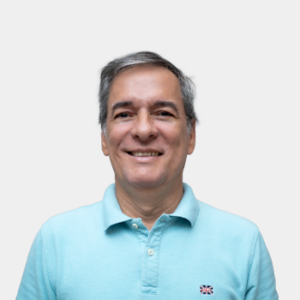
Front photograph of Professor David Alfredo Fuentes

David Alfredo
FUENTES DÍAZ

Doctor in Energetic Technology
Front photograph of Professor Diego Fernando Villegas Bermudez

Diego Fernando
VILLEGAS BERMÚDEZ

Doctor in Mechanical Engineering
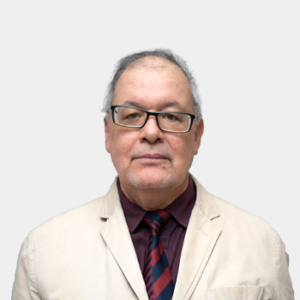
Front photograph of Professor Heller Guillermo Sanchez

Heller Guillermo
SÁNCHEZ ACEVEDO

Doctor in Applied and Computational Mechanics
Front photograph of Professor Isnardo Gonzales Jaimes

Isnardo
GONZÁLEZ JAIMES

Specialist in Mechanical Engineering
Front photograph of Professor Jabid Eduardo Quiroga

Jabid Eduardo
QUIROGA MÉNDEZ

Doctor in Civil Engineering
Front photograph of Professor Jorge Enrique Menedes

Jorge Enrique
MENESES FLÓREZ

Master in Mechanical Engineering
Front photograph of Professor Jorge Luis Chacon Velasco

Jorge Luis
CHACÓN VELASCO

Doctor in Thermofluidodynamic Processes Applied to MCIA
Front photograph of Professor Jose David Perez Ruiz

José David
PÉREZ RUIZ

Doctor in Mechanical Engineering
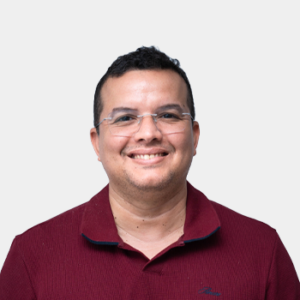
Front photograph of Professor Julian Ernesto Jaramillo Ibarra

Julián Ernesto
JARAMILLO IBARRA

Doctor in Thermal Engineering
Front photograph of Professor Laura Bohorquez Bolivar

Laura
BOTERO BOLÍVAR

Doctor of Aeroacoustics
Front photograph of Professor Manuel de Jesús Martínez

Manuel de Jesús
MARTÍNEZ

Doctor in Mechanical Engineering
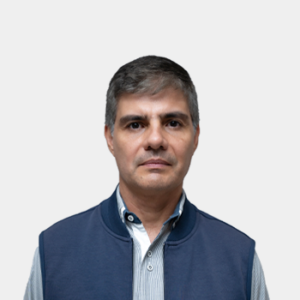
Front photograph of Professor Octavio Andres Gonzales

Octavio Andrés
GONZÁLEZ ESTRADA

Doctor in Mechanical and Material Engineering
Front photograph of Professor Oscar Rodolfo Bohorquez

Oscar Rodolfo
BOHÓRQUEZ BECERRA

Doctor in Materials Engineering
Front photograph of Professor Pedro Jose Diaz Guerrero

Pedro José
DÍAZ GUERRERO

Master in Numerical Methods Applied to Calculus
Front photograph of Professor Ricardo Alfonso Jaimes Rolon

Ricardo Alfonso
JAIMES ROLÓN

Master in Mechanical Engineering
Front photograph of Professor William Pinto Hernandez

William
PINTO HERNÁNDEZ

Doctor in Mechanical Engineering
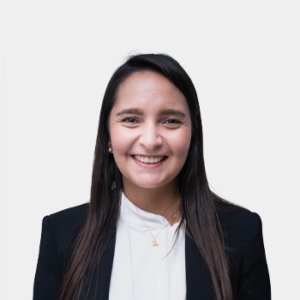
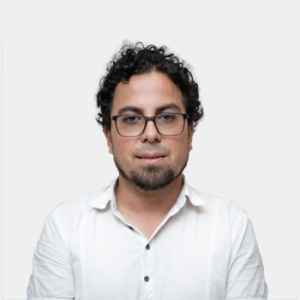
Front photograph of Professor Yesid Javier Rueda Ordoñez

Yesid Javier
RUEDA ORDOÑEZ

Doctor in Chemical Engineering

Our

reach

Icono de estudiantes
0

Students

*Second semester
2023 data

Graduado
0

Alumni

*Data taken until
september 2023

WOULD YOU LIKE MORE INFORMATION?

Contact Us

Contact
Contact

School of Mechanical Engineering
Telephone: +57 (607) 634 4000

Extension: 2483 – 2475

Email: escime@uis.edu.co

Location
Location

Campus Central UIS

Bucaramanga, Santander

Carrera 27 calle 9

Edificio Ingeniería Mecánica

Office hours
Office hours

Office Hours:

Monday to Friday

7:00 a.m. – noon

2:00 p.m. – 5:00 p.m.

Skip to content